Friday, July 8, 2016

Is There Actually a "Lack of Research" Regarding Medical Marijuana?

Time after time we have heard over and over from some medical professionals that there is no scientific data that suggests the use of marijuana for medical purposes can be safe and effective. This is mostly because there haven’t been many formal research studies conducted in the United States. Stories of improved quality of life from patients suffering from conditions ranging from pain to seizures have gone unqualified by the medical community and labeled as purely anecdotal.

While the anecdotal label may be technically accurate, the lack of research is truly to blame. Marijuana’s classification by the Drug Enforcement Agency has largely prohibited research studies to be conducted. Classified as a Schedule I controlled substance, marijuana is considered by the DEA to be amongst drugs with the highest potential for abuse. For decades, marijuana has been classified with drugs like LSD and heroin. This classification has made research nearly impossible because of restrictions Schedule I drugs carry.
Many have called upon the DEA to reclassify marijuana to a Schedule II drug, which wouldn’t make it legal on a federal level, but would allow for studies to be conducted. Associations including The American Academy of Pediatrics has supported and even requested the Drug Enforcement Agency to reclassify marijuana.

The Huffington Post published a statement in early 2015 from the American Academy of Pediatrics recognizing their support for medical marijuana research.  “The AAP strongly supports research and development of pharmaceutical cannabinoids and supports a review of policies promoting research on the medical use of these compounds,” the AAP statement reads.

While there may not be a lot of research taking place here in the United States, The Marijuana Business Daily reported that we can finally welcome the launch of a new research institute in the Czech Republic. Known as the International Cannabis and Cannabinoid Institute (ICCI), the research center could provide major value to medical cannabis businesses worldwide. A partnership between American and Czech stakeholders has formed allowing this to take place. This partnership includes organizations such as Americans for Safe Access, KOPAC a Czech patient advocacy group, New York-based cannabis investment firm Dioscorides Global Holdings as well as some universities and high-tech companies.

“The main work of the ICCI is to provide scientific instruments to public and private institutions all over the world,” CEO Pavel Kubu said in a statement.
Medical Marijuana hasn’t just become a big industry in the United States, but is becoming a worldwide phenomenon that has captured the interest of people all over the world. Medical marijuana was legalized in the Czech Republic in 2013.

Thursday, July 7, 2016

She's The Second Infant To Receive Cannabis Oil at Aurora's Children's Hospital This Month

She's The Second Infant To Receive Cannabis Oil at Aurora's Children's Hospital This Month                    

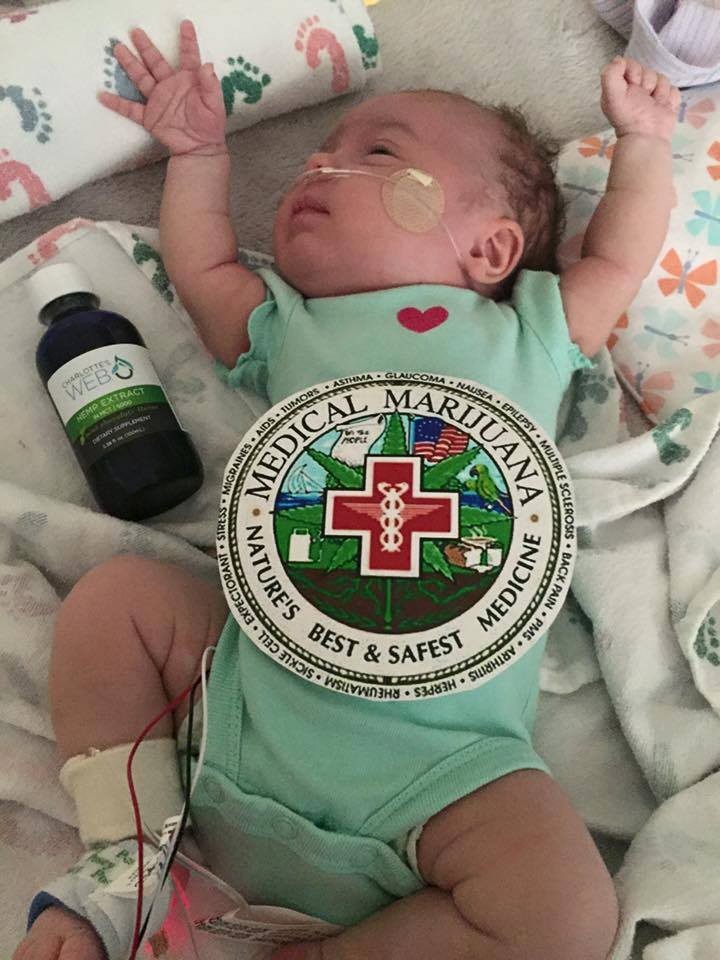
Less than two weeks ago we saw a the trending story on Facebook about Baby Amylea who was transferred from Albuquerque, New Mexico to Aurora, Colorado in order to receive Charlotte's Web cannabis oil. Baby Amylea has been transferred out of the NICU and is doing much better according to her mom. Earlier today, a second little precious newborn received her first dose of Charlotte's Web for uncontrollable seizures.


Baby Adeline is only 5 weeks old and has been at Children's Hospital since she was born. Right after her birth she began having seizures, so mom immediately turned to cannabis to treat her baby and is hoping for similar positive results like the improvements made with Amylea.

The first dose of Charlotte's Web was administered less than 12 hours ago. We'll keep you posted on Baby Amylea and Baby Adeline, and ask that you send good vibes to their families.
The family has set up a GoFund me page to help raise money for Adeline's treatment.

State of Clolorado to Become First to Fund Cannabis Research

DENVER -- Colorado became a pioneer in funding research that shows the benefits of medical marijuana Wednesday.

http://kdvr.com/2014/12/17/colorado-becomes-first-state-to-fund-research-to-show-benefits-of-medical-marijuana/#ooid=t0OGRjcjoY5i44lsweWEDBUSn6arFSfZ

The Colorado Department of Public Health and Environment approved more than $8 million to pay for several research projects.

The money to fund the medical research comes from application fees from medical marijuana patients. Some of them say using the money this way is nothing less than stealing. And now they're suing the Board of Health to stop them.

The Turner family comes before the board to ask for a life-changing vote. "My son has Crohn's disease. I'm sorry," cries Wendy Turner.

She and her family moved to Colorado from Illinois to get medicinal cannabis for their 14-year-old son Coltyn. And it worked. Just 8 months later, he was in remission.

"Our son has made a complete turnaround. A year ago he was in a wheelchair, unable to stand more than a few moments. He can climb mountains now," says Coltyn’s dad, Tom.

Now, they want the board  to approve funding for medical marijuana research to help others--like combat veteran Chris Latona, who deals with post-traumatic stress disorder.

"I need help today. I need help to get through tonight, so I can live through tomorrow and continue my healing," he says.

But others say, while they support research, they don't support using money from medical marijuana patients. "This is a grant that can come from private money. It does not have to come from us," says Phillip Barton, who is opposed to the funding.

"It is appalling. It is shameful and I will do everything as I promised," says funding opponent Kathleen Chippi. That includes suing the state to prevent the funding--on the grounds the money should only be spent to maintain the medical marijuana registry.

But that doesn't stop the board from siding unanimously with families like the Turners, and those who say today's decision will help end the suffering of so many.

"The rest of the country is coming here as refugees. It is up to us to provide the medicine through marijuana," says U.S. Air Force Veteran Greg Duran.

"We have no research like this yet in this country and Colorado is leading the way," says Vietnam veteran and Purple Heart recipient Tony Shaw.

The money will fund the following study programs:
  • Two on PTSD
  • Pediatric epilepsy
  • Irritable bowel sydrome
  • Pain relief for children with brain tumors
  • Comparing cannabis versus oxycodone for pain relief

The  board also has enough money to fund another research program, which it will discuss in about in three months.

Monday, July 4, 2016

Colorado becomes first state to fund research to show benefits of medical marijuana


DENVER -- Colorado became a pioneer in funding research that shows the benefits of medical marijuana Wednesday.

The Colorado Department of Public Health and Environment approved more than $8 million to pay for several research projects.

The money to fund the medical research comes from application fees from medical marijuana patients. Some of them say using the money this way is nothing less than stealing. And now they're suing the Board of Health to stop them.

The Turner family comes before the board to ask for a life-changing vote. "My son has Crohn's disease. I'm sorry," cries Wendy Turner.

She and her family moved to Colorado from Illinois to get medicinal cannabis for their 14-year-old son Coltyn. And it worked. Just 8 months later, he was in remission.

"Our son has made a complete turnaround. A year ago he was in a wheelchair, unable to stand more than a few moments. He can climb mountains now," says Coltyn’s dad, Tom.

Now, they want the board  to approve funding for medical marijuana research to help others--like combat veteran Chris Latona, who deals with post-traumatic stress disorder.

"I need help today. I need help to get through tonight, so I can live through tomorrow and continue my healing," he says.

But others say, while they support research, they don't support using money from medical marijuana patients. "This is a grant that can come from private money. It does not have to come from us," says Phillip Barton, who is opposed to the funding.

"It is appalling. It is shameful and I will do everything as I promised," says funding opponent Kathleen Chippi. That includes suing the state to prevent the funding--on the grounds the money should only be spent to maintain the medical marijuana registry.

But that doesn't stop the board from siding unanimously with families like the Turners, and those who say today's decision will help end the suffering of so many.

"The rest of the country is coming here as refugees. It is up to us to provide the medicine through marijuana," says U.S. Air Force Veteran Greg Duran.

"We have no research like this yet in this country and Colorado is leading the way," says Vietnam veteran and Purple Heart recipient Tony Shaw.

The money will fund the following programs:
  • Two on PTSD
  • Pediatric epilepsy
  • Irritable bowel sydrome
  • Pain relief for children with brain tumors
  • Comparing cannabis versus oxycodone for pain relief

The  board also has enough money to fund another research program, which it will discuss in about in three months.

Sunday, July 3, 2016

Research About Medical Marijuana


Recent stories about children who have had positive outcomes from the marijuana derivative cannabidiol (CBD) give reason for hope and should encourage further studies. Children’s Hospital Colorado supports strong clinical trials and rigorous scientific research, based here and elsewhere, to determine the safety and efficacy of medical marijuana.
Children’s Colorado is committed to participating in high-quality research. We are working with the state and federal government to initiate trials related to marijuana, and the Colorado Department of Public Health and Environment (CDPHE) has awarded us funds to study marijuana in epilepsy, neuro-oncology and inflammatory bowel disease. In addition, we are in the process of working to participate in a FDA-approved double-blind placebo controlled trial of cannabidiol (CBD) in the treatment of epilepsy.


Funding challenges for marijuana research


The research needed cannot occur without funding, and at the present time it is very difficult to obtain federal funding to complete research on medical marijuana due to the designation of marijuana as a DEA Schedule 1 drug. The state of Colorado has recently announced funding to support research on medical marijuana that we hope will enable at least some initial studies on this important topic.

What does Schedule 1 mean?


Marijuana is listed by the Food and Drug Administration under Schedule I of the Controlled Substances Act (CSA) – the most restrictive category. The White House states that “the raw marijuana plant, which contains nearly 500 different chemical compounds, has not met the [FDA’s] safety and efficacy standards” to be deemed an FDA-approved drug for medicinal treatment.

Happy Birthday Daner!!

July 2, 1958


Yesterday was sad, Daner would have been 58. I miss my brother every day!. I know he is smiling down on Daner's Hope Foundation. He will never be forgotten! Happy Birthday Daner, you are missed and loved deeply!

Love, Elaine

http://www.danershope.org

Saturday, July 2, 2016

Children’s Hospital in Colorado to Conduct 3-Year Study on Cannabis for Epilepsy


AURORA, COLORADO – During this spring, Dr. Kelly Knupp, a pediatric epilepsy specialist, and her colleagues will be conducting a three-year, $500,000 observational study at Children’s Hospital in Aurora, Colorado.


Three-Year Cannabis Study Set To Begin This Spring


There has been a lot of recent buzz surrounding the success of medical marijuana in the treatment of childhood epilepsy. Many parents are claiming that medical marijuana has significantly reduced both their children’s seizures frequency and intensity. Because of this, families with children like Charlotte Figi are making the move to MMJ-friendly states, like Colorado, desperate to find an alternative treatment for their child’s severe epileptic disorders.
“Many of these children have very poorly controlled epilepsy and can be pretty fragile from a medical stand point. I think it is our responsibility as professionals to answer this question.” Dr. Knupp

Currently, there are around 250 children with medical marijuana cards who have Dravet’s Syndrome in the state of Colorado. Out of these 250 children, over 100 of them are patients at Children’s Hospital, even though the hospital is not legally permitted to administer cannabis as a form of treatment.

To help provide light to the subject, Knupp and her colleagues will be conducting a study to help increase the research in regards to cannabis and the effectiveness it has on epileptic patients.

“There’s a lot that’s still unknown. Many of these children have very poorly controlled epilepsy and can be pretty fragile from a medical stand point. I think it is our responsibility as professionals to be able to answer their questions and provide the help they need,” says Dr. Knupp.


$500,000 of State-Funded Grant Money Put To Work


Knupp and her colleagues will be using the $500,000 state-funded grant in order to conduct a three-year observational study. The study is going to consist of analyzing the results from 150 medical marijuana patients who consume cannabis products regularly to reduce or relieve their most serious side effects.

According to the Colorado Department of Public Health and Environment, the funding has come from the medical marijuana program’s cash fund. Back in 2013, the state put aside $10 million specifically for medicinal cannabis research projects. It looks as if they are finally putting some of that money to work.

“Most of these families biggest fear is that it won’t work… They’re desperate to have their children better,” says Dr. Knupp


As the study looks to get underway within the next couple of months, the team at the Children’s Hospital knows there will be plenty of eyes awaiting the results. With the large influx of families looking to medicinal marijuana as a last resort for their children, this study could be the much-needed stepping stone to further research in the field.